
You’ve probably torn one open without even thinking about it.
That tiny flat pouch tucked inside a beauty subscription box — just enough gel base coat for one clean application. You used it, tossed it, maybe thought huh, that was kind of clever. And then moved on.
But here’s the thing. If you’re a nail brand owner, a manufacturer, or anyone on the production side of beauty — that little sachet deserves a second look. Because nail polish sachets are quietly becoming a serious format in cosmetic packaging, and the brands paying attention right now are the ones who’ll own the sampling and trial channel in a few years.
Let me walk you through exactly what these are, when they work, and what it actually takes to produce them at scale.
What Is a Nail Polish Sachet? (And How It Differs From Other Packaging)

A sachet is a small, heat-sealed, flexible pouch — designed for a single dose of product.
Think of it as the cosmetics world’s version of a ketchup packet, but engineered for gel polish, liquid nail color, or rubber base coat. The film is usually laminated multi-layer material that protects the product from light, air, and moisture. You tear it open, apply the contents, and it’s done. No cap to lose. No brush to clean. No bottle sitting half-empty on a shelf for six months.
That’s the part traditional nail polish bottles can’t compete with.
Unlike a glass bottle with a brush applicator, a sachet is single-use packaging at its most functional. It doesn’t try to be premium. It tries to be efficient, hygienic, and dead-simple to use.[ppl-ai-file-upload.s3.amazonaws]
Now, there’s a misconception worth clearing up right away: nail polish sachets are not trying to replace the bottle. The standard glass nail polish bottle still commands the majority of market share — standard nail polish packs are projected to hold 61.7% of total market share in 2025. Sachets aren’t chasing that. They’re filling a different job entirely.
Where Nail Polish Sachets Actually Make Sense
So where do gel nail polish sachets actually show up in the market?
They’re more common than you think. Brands like F.O.X Nails already sell single-use gel base coat and rubber sachets — typically 5–10ml per unit — aimed directly at professional nail technicians who want a pre-measured, single-application dose. Vòlia Gel sells classic gel nail polish sachets for refill and trial use. These aren’t novelty items. They’re functional products with a real customer base.
Here are the three scenarios where a nail polish sachet genuinely outperforms a bottle:
1. Sampling & Trial Programs
You’re launching a new color collection. Instead of giving away full bottles (expensive) or nothing at all (useless), you send gel nail polish sachets to your top 200 salon partners. The cost per unit is low enough to treat it like a marketing line item, not a product cost. The salon tech tries it, loves it, and orders full bottles. That’s beauty product sampling that actually converts.
2. Travel & Mobile Work
Nail technicians doing hotel visits, weddings, or event pop-ups don’t want to lug ten full bottles in a kit bag. A sachet-based travel kit is lighter, hygienic, and doesn’t leak in transit. It also looks intentional — not like you grabbed whatever was in the drawer.
3. Promotional Kits & Subscription Boxes
Beauty subscription boxes are a massive channel for sachet-format cosmetics. Brands get real product placement for a fraction of the cost of including a full bottle. The unboxing experience is great, the cost per trial is low, and social media does the rest.
Where they genuinely fall short:
Open a sachet, and it’s gone. For a full gel nail set on a client, you’re looking at multiple sachets — which adds up fast. For daily salon use at volume, a standard bottle still wins on per-application cost. Sachets are support players, not leads.
Sachets vs. Bottles vs. Pouches: A Packaging Type Comparison
A lot of small brands ask me the same thing: do I switch to sachets, or do I stick with bottles? Honestly? The answer is usually both.


Here’s a simple breakdown:
| Format | Best Application | Reusable? | Unit Cost | Brand Equity |
|---|---|---|---|---|
| Nail Polish Sachet | Sampling, travel kits, promos | No | Very low | Moderate |
| Glass Bottle | Main retail SKU, salon daily use | Yes | Higher | High |
| Stand-Up Pouch | Eco refill lines, larger volumes | Sometimes | Medium | High |
Sachets win on cost and hygiene. For beauty product sampling, event kits, and subscription box inserts, no other format comes close on cost-per-trial.
Bottles win on shelf presence and brand storytelling. If you want a Sephora placement or a premium salon display, the glass bottle is your workhorse. The nail polish packaging market recognizes this — glass still leads with 52.4% of total revenue in 2025.
Stand-up pouches are interesting for refill packaging — especially if your brand is leaning into a sustainability angle. But they’re a more complex production and marketing story.
The smartest nail brands aren’t choosing one. They’re using sachets for sampling, bottles for retail, and sometimes pouches for eco SKUs. Each channel, each format.
Nail Polish Packaging Machines: From Bottles to Sachets
Here’s where the conversation shifts from consumer to manufacturer.
Because making a nail polish sachet sound appealing is easy. Actually producing them at scale is a different problem entirely.
Gel nail polish formulas are viscous, photosensitive, and sensitive to temperature. Under-fill a sachet and the dose is unusable. Over-fill and it leaks in the mail. Seal it improperly and the shelf life tanks. This is not a hand-fill operation beyond the prototype stage. You need a filling machine — the right one, configured for your formula.
Here’s what the actual production equipment landscape looks like:
VFFS Machines (Vertical Form Fill Seal)
The standard for sachet production. The machine takes flat laminated film from a roll, forms it into a tube around a filling tube, doses your product in, and seals and cuts individual sachets — continuously. Output speeds vary by machine class, but well-configured lines run thousands of sachets per hour. For a dedicated gel nail polish sachet line, a VFFS machine set up for high-viscosity liquids is the go-to solution.
Premade Pouch Filling Machines
Slower than VFFS, but more flexible on pouch design. These machines work with pre-formed sachets — they open them, fill them, and seal them. If your branding is heavy on custom sachet shapes or specialty film finishes, this is often the better route.
Automatic Nail Polish Filling Lines (Bottle Format)
For your bottle SKUs, monoblock fill-and-cap lines handle filling, capping, and labeling in one automated sequence. Some high-precision nail polish filling lines run up to 40 bottles per minute. These are purpose-built for rigid containers and don’t cross over to sachet formats.
Semi-Automatic Filling Lines
For smaller brands or startups, semi-automatic cosmetic packaging machines give you machine-level fill accuracy at a lower entry cost. Good for running shorter batches of 500–2,000 units before you’re ready to invest in full automation.
Custom Cosmetic Packaging From BG Machinery
This is where a supplier like BG Machinery becomes genuinely relevant.
BG Machinery has been manufacturing filling and packaging machines since 2008, and their customer base includes 100+ cosmetic producers — including names like Estée Lauder and Shiseido — who run automated packaging and sealing lines on BG equipment. They cover the full range of cosmetic packaging machine types: liquid filling lines, sachet and stick-pack systems, VFFS machines, and premade pouch fillers.
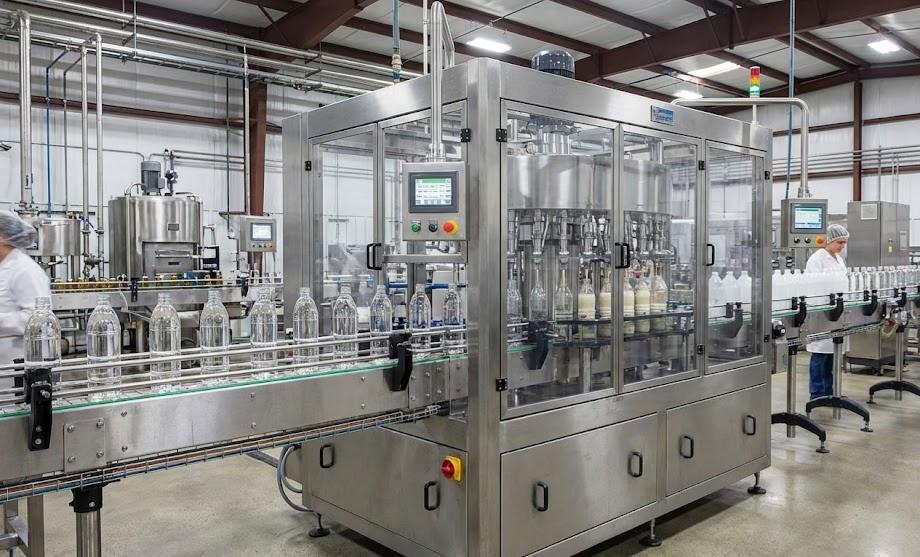
What’s useful here isn’t just the range — it’s the customization. Gel polish, liquid top coat, rubber base — each formula has different viscosity, flow behavior, and sensitivity. BG’s engineers configure filling heads, pump types, and seal parameters specifically for your product. That matters a lot when your formula is a sticky, light-reactive gel that behaves nothing like water.
Our machines support jar, 4-side seal, 3-side seal bag, stick pack, stand-up bag, pillow bag, and flat-bottom bag formats. That kind of format flexibility means you can handle multiple packaging types on adapted lines — which is exactly what a brand running both bottle SKUs and a sachet sampling program needs.
Explore the full packing machine range to see what fits your nail polish production setup.
When Should Cosmetic Brands and Manufacturers Actually Consider Sachets?
Let me be straight about this. Sachets aren’t magic. And they’re not a shortcut to a “cool” brand aesthetic.
But the business case is real in these four situations:
You’re testing a new formula or color before a full launch. Run 5,000 sachets instead of committing to 10,000 bottles. Lower tooling cost, faster production run, minimal inventory risk. It’s a market test disguised as a product. If it works, you scale. If it doesn’t, you’re not sitting on 8,000 unsold units.
You’re building out a sampling program. The nail polish packaging market is projected to reach $3.9 billion by 2035, partly driven by increasing demand for travel-friendly, compact formats. Sachets put your product in more hands for less money than any other format.
You’re operating in the professional salon channel. Nail techs are increasingly asking for single-use, pre-measured products for hygiene reasons — especially post-pandemic. A gel nail polish sachet checks every box: controlled dose, sealed until use, no cross-contamination risk.
You’re doing OEM cosmetic packaging for multiple clients. One sachet filling line can run different formulas for different brands just by swapping the product and film roll. Small batch production becomes economically viable. That’s a huge advantage for contract manufacturers servicing multiple beauty clients.
The flip side is simple: if your primary goal is shelf presence in premium retail, a sachet alone won’t build that brand story. Sachets work with your main SKU strategy, not instead of it.
FAQ about Nail Polish Sachets
Are nail polish sachets hygienic?
Yes — and it’s one of their strongest practical advantages. A sealed nail polish sachet contains product that hasn’t been opened, touched, or exposed to air until the moment of use. For salon environments with strict hygiene protocols, single-dose cosmetic sachet packaging is a genuine upgrade over multi-use bottles that have been opened and closed dozens of times.
What’s the difference between a gel nail polish sachet and regular liquid nail polish packaging?
Mostly formula. Gel nail polish sachets contain UV/LED-curable formulas — thicker, more viscous, requiring specific pump types in the filling machine (typically piston or gear pumps). Regular liquid nail polish is thinner and solvent-based, which makes it easier to fill but more sensitive to evaporation, putting more pressure on seal quality. From a cosmetic liquid packaging machine standpoint, you’d usually use different filling heads for each.
How do you fill nail polish into sachet packages at production scale?
The standard industrial approach is a VFFS machine or premade pouch filling machine with a cosmetic-grade liquid filling system. Product loads into a hopper, moves through a volumetric or piston-based fill system, and gets heat-sealed into individual pouches. For gel formulas specifically, temperature-controlled hoppers maintain consistent viscosity during the filling process. At startup scale, semi-automatic sachet filling machines offer a lower cost-of-entry with decent output. For a customized solution, a manufacturer like BG Machinery can configure the right filling and sealing machine for your specific nail polish formula.
What’s a realistic minimum batch size for sachet nail polish production?
Semi-automatic filling lines handle shorter runs well — 500 to 2,000 units per run is viable. Fully automatic cosmetic packaging lines are optimized for higher volumes, typically 10,000+ units per run to justify setup time and material changeover.
Can a standard nail polish bottle filling machine be adapted for sachets?
No — not without major modification. Bottle filling lines are built around rigid containers. They’re mechanically incompatible with flexible film sachet formats. If you want to add sachet production capability, you need a dedicated line. The good news is that suppliers offering customized packaging solutions can configure a sachet line to complement your existing bottle operation rather than replace it.
Ready to Package Smarter? Here’s Your Next Move.
The cosmetic packaging machinery market is on track to hit $9.19 billion by 2035. Automation in nail polish filling and production is accelerating. And single-dose formats — sachets, stick packs, single-use cosmetic packaging — are a real growth segment inside that story.
Nail polish sachets aren’t a fad. They’re a format with a clear job, a clear customer, and a clear production path.
If you’re at the point where sachet production is actually on your roadmap — whether for sampling, OEM cosmetic packaging, or a dedicated salon product line — the machine decision is what matters most. Get the right filling and sealing system for your formula type and your volume, and the rest follows naturally.
BG Machinery offers free customized solution design for cosmetic brands and contract manufacturers figuring out their packaging machine setup. It’s worth a conversation before you commit to anything.
Because the best packaging decision isn’t the most expensive one. It’s the one that actually fits your product, your volume, and your customers.