
Are You Stuck Between a Box and a Bag?
Are you stuck between a box and a bag? It’s a classic production line dilemma. I’ve seen countless manufacturers agonize over this decision: do you choose the sturdy reliability of a bottle, or the high-speed flexibility of a pouch?
Let’s be honest. Your choice of packaging container isn’t just about shelf appeal. It dictates production efficiency, brand perception, and how much you ultimately spend on logistics.
What Is the Real Difference Between Container Filling and Bagging?
The primary difference lies in structural integrity. Container filling focuses on rigid vessels such as jars and bottles, while bagging machines handle flexible materials like pouches and film.
Container filling systems are automated solutions designed to fill, weigh, and position products into rigid containers. These lines typically rely on conveyors and star wheels to ensure precise movement and alignment throughout the process.
Bagging machines, including VFFS and premade pouch systems, are built for speed. They excel at high-throughput production and are optimized for lightweight, collapsible packaging. While flexible packaging saves space and material, rigid containers provide a level of protection and a “premium feel” that bags cannot replicate.
Industry research and buyer behavior studies consistently indicate that rigid packaging formats are associated with higher perceived product quality, particularly in food, health, and chemical categories. In multiple market surveys, consumers and B2B buyers alike tend to associate jars and bottles with better protection, longer shelf life, and greater product reliability, even when the contents are technically identical.
Why Are People Searching for Two Specific Machines?
Understanding search intent helps reveal what manufacturers actually care about when evaluating packaging equipment.
Here is a simplified breakdown of what users are typically looking for:
| Keyword | User Intent | Typical Content Type |
|---|---|---|
| Container Filling | Automated solutions for rigid containers | Equipment models, full-line cases, application guides |
| Bagging Machine | Automation for flexible packaging | Technical specifications, speed data, pouch formats |
In short, buyers are not comparing machines in isolation. They are evaluating packaging strategies.
Which One Wins the Head-to-Head Battle?
There is no universal winner. The right choice depends on your product characteristics, production goals, and budget priorities.
| Dimension | Container Filling (Rigid) | Bagging Machine (Flexible) |
|---|---|---|
| Structural stability | High, easy to stack and ship | Medium, flexible by nature |
| Branding impact | Often perceived as premium | Functional and cost-focused |
| OEM / ODM scalability | Easy to standardize | Depends on pouch design |
| Production speed | Product- and model-dependent | Very high, thousands per hour |
| Cost sensitivity | Higher initial investment | Lower packaging material cost |
A Practical Rule of Thumb
- Powders and small granules Bagging machines are often the better option due to lower material costs and efficient bulk handling.
- Liquids, sauces, and premium solids Container filling systems are typically the stronger choice, especially when brand image and product protection matter.
When Should You Choose Rigid Containers?
In many cases, the additional cost of rigid packaging delivers long-term value. A container filling system makes sense when:
- Your customers expect a premium experience Health foods, dairy, and nutraceuticals often require re-sealability and a solid, trustworthy package.
- Your product needs protection Rigid containers better withstand transportation stress and reduce damage-related losses.
- You serve a specialized niche Condiments, supplements, and heavy-duty powder products frequently rely on jars or bottles for consistency and safety.
Finding the Right Equipment with BG Machinery
Having worked with both rigid container filling lines and high-speed bagging systems across food, chemical, and liquid industries, BG Machinery has accumulated hands-on experience in designing packaging solutions for very different production realities. This dual capability allows manufacturers to evaluate container filling and bagging options based on process requirements and long-term efficiency, rather than being limited by a single packaging format.
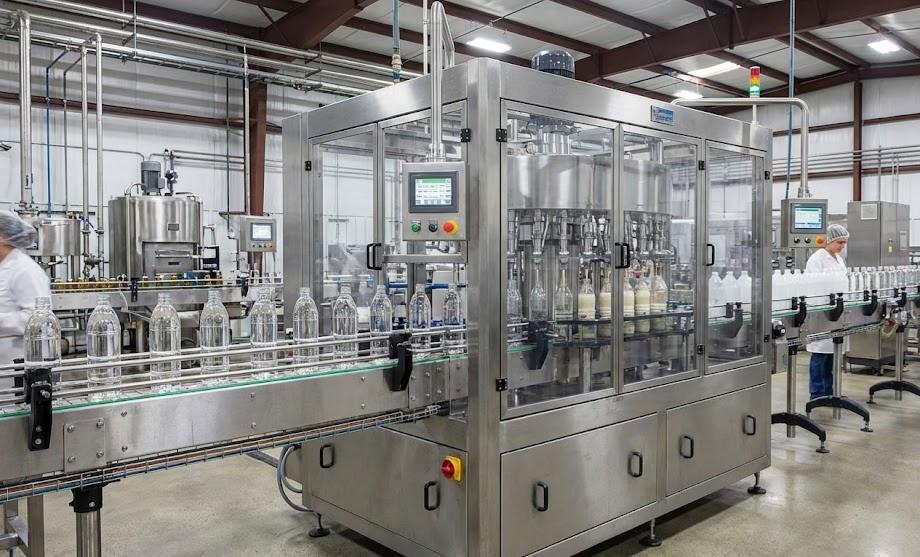
At BG Machinery, we don’t just sell standalone machines. We engineer packaging lines that support long-term production stability.
Depending on your packaging strategy, you may want to explore:
- Rigid Packaging Solutions Our Automatic Plastic and Glass Bottle Filling Machines are designed for precise dosing and seamless integration with capping and labeling systems.
- Flexible Packaging Solutions Our VFFS and Premade Pouch Packing Machines focus on speed, versatility, and efficient material use.
- Turnkey Packaging Lines We also provide industry-specific solutions for food, chemical, and liquid applications, covering the entire packaging workflow.
Each system is designed to fit into a scalable automation strategy, not just a single production task.
Is the ROI Really There?
ROI should never be calculated on machine price alone.
Rigid containers cost more than flexible film, both to purchase and to store. However, container filling lines often enable higher levels of automation, reducing labor dependency and improving consistency over time.
When evaluating ROI, pay close attention to:
- Changeover efficiency
- PLC control logic
- Downtime during format switches
Industry benchmarks show that changeover time is one of the most underestimated cost drivers in automated packaging lines. In high-mix production environments, inefficient format changes can account for a significant portion of unplanned downtime, often outweighing the savings gained from lower packaging material costs. As a result, manufacturers increasingly factor changeover speed and automation stability into ROI calculations, rather than focusing solely on machine price.
Frequently Asked Questions
What exactly is a container filling machine?
It is an automated system designed to fill products into rigid containers such as bottles, jars, or tins. These machines are commonly used for heavy-duty or high-value products.
What products work best with bagging machines?
Powders, granules, and small solid items are ideal. Bagging machines are especially efficient for VFFS and premade pouch formats.
What is the main difference I should focus on?
Rigid versus flexible packaging. Container filling emphasizes stability and line integration, while bagging prioritizes material efficiency and speed.
How do I choose between the two?
Evaluate your product form, production scale, and brand positioning. Premium brands often benefit from rigid containers, while cost-driven products favor pouches.
Conclusion
Choosing between container filling and bagging machines is not about technology preference. It is about aligning packaging structure with operational reality and brand ambition.
When protection, stability, and perception matter, rigid containers, and the filling systems behind them, clearly lead.
If you are unsure which direction fits your product, making the wrong decision can be costly. Comparing real-world costs between a VFFS bagging system and a bottle filling line before investing is often the smartest first step.