
For brand managers and packaging engineers in North America, the choice between recyclable and compostable films is no longer just a marketing preference—it is a strategic necessity. Making the right choice requires balancing three critical factors: the reality of local recycling infrastructure, evolving regulations and labeling laws, and the technical compatibility with your packaging machinery.
Why this decision matters now (business risks & opportunities)
Consumer expectations & retailer requirements
Major North American retailers are increasingly setting strict deadlines for packaging sustainability. Brands are under pressure to reduce virgin plastic usage and ensure their packaging is compatible with established recovery streams.
Regulatory pressure & labeling risk
The regulatory landscape is shifting rapidly. Claims of “recyclability” are under intense scrutiny by authorities and third-party programs. Organizations like How2Recycle have tightened their guidelines, particularly regarding Store Drop-Off programs, making it essential for brands to verify that their films truly meet the requirements for recovery streams rather than just theoretical recyclability.
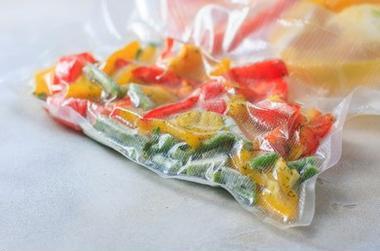
Recyclable film vs compostable film
What “recyclable film” typically means in North America
In the US and Canada, “recyclable film” generally refers to polyethylene (PE) structures (LDPE or HDPE) that pass specific protocols. However, it is crucial to understand that this does not usually mean curbside recycling. For the vast majority of flexible packaging, “recyclable” means the consumer must take the wrapper to a dedicated Store Drop-Off location.
For brands evaluating these film types in stand-up pouches or pillow-pack applications, see our guide on Stand-Up Pouch Packaging Machines and Pillow Pack / Flow Wrap Machines.

What “compostable film” means
Compostable films are bioplastics designed to break down under specific conditions. It is vital to distinguish between “Industrial Compostable” (requires high heat and controlled facilities) and “Home Compostable” (breaks down in lower temperatures). Standards such as ASTM D6400 (US) and EN 13432 (Europe) define these parameters.
Comparison: Recyclable vs. Compostable Films
| Dimension | Recyclable Films | Compostable Films |
|---|---|---|
| End-of-life route | Mechanical recycling via MRF or, more commonly, film drop-off programs. | Industrial composting facilities or limited home composting environments. |
| Infrastructure readiness | North America: Curbside film recycling is limited; relies heavily on supermarkets/specialized drop-off points. | Industrial composting facilities are unevenly distributed, with many regions lacking coverage. |
| Best-fit applications | Dry goods, shelf-stable foods, and non-contaminated packaging easy to collect centrally. | High food-residue packaging, organic waste bags, and single-use service items. |
| Consumer communication | Focus on “Recyclable, but check local guidelines/drop-off at store.” | Focus on “Must be sent to industrial composting; do not put in standard recycling bin.” |
| Regulatory/labeling | Governed by FTC Green Guides and How2Recycle standards. | Must clearly label “compostable” with certification standards to avoid greenwashing. |
Infrastructure Reality in North America
Film Recycling Challenges
While the desire for recycling is high, the reality on the ground is complex. North America suffers from low film recycling rates due to mixed-material structures, a lack of unified collection systems, and significant contamination issues. Furthermore, many films that are “theoretically recyclable” still end up in landfills or incinerators because local programs simply cannot process them. Therefore, “design for recycling” must be validated against regional capabilities.

Composting Capacity and Limitations
Similarly, compostable packaging faces logistical hurdles. The number of industrial composting facilities is limited and geographically fragmented, meaning “compostable” packaging often lacks a route to a compost pile. Additionally, composters are strict about contamination; if non-compostable plastics are mixed in, it ruins the compost quality. Clear labeling and consumer education are therefore critical to prevent contamination.
Decision Framework: When to Choose Recyclable vs Compostable Films
To make the right choice for your product, your engineering and brand teams should answer the following:
- Contamination Level: Is the product highly contaminating (e.g., wet pet food, ready meals vs. dry snacks)? High-residue applications often lean towards compostable films.
- Local Infrastructure: What is the recovery landscape in your target market? If there is a mature store drop-off network, a recyclable solution may be more viable.
- ESG Goals: Does your brand prioritize “circular economy/material recovery” or “waste reduction/organic waste management”?
- Barrier Requirements: Can you achieve the necessary shelf life using a mono-material, high-barrier recyclable structure?
Scenario-Based Recommendations
- Scenario A: National Dry Snack Brand. Recommendation: Prioritize recyclable mono-material films (like PE/PP). Combine this with How2Recycle labeling and partnerships with store drop-off programs.
- Scenario B: Regional Organic Food Brand. Recommendation: If the specific region has a mature industrial composting system, evaluate compostable film. This is ideal for packaging that will have high food residue.
- Scenario C: D2C Meal Kit Subscription. Recommendation: Consider a hybrid strategy. Use recyclable materials for outer logistics packaging, and explore compostable films for inner, high-residue component packaging, depending on regional facility access and cost.
Designing Recyclable Film Structures for North America
From Multi-Layer to Mono-Material
The industry is shifting away from complex multi-layer laminates. Leading brands are redesigning packaging to move from multi-material composites to mono-material structures (e.g., “all-PE” or “all-PP”) that are compatible with existing recycling streams.
For guidance on material-compatible packaging systems, see our VFFS / vertical form-fill-seal solutions for modern mono-material film handling.
Performance vs Recyclability Trade-Offs
Engineers often face a trade-off between barrier performance (oxygen/moisture protection), clarity, heat sealability, and recyclability. For some high-barrier applications, the goal may be “recycle-ready” designs that prioritize material reduction first, before full widespread recyclability is achievable. The consensus is to prioritize material reduction and recyclability, reserving compostable solutions for specific scenarios where recycling is impossible.
Designing Compostable Film Solutions Responsibly
Certification and Standards to Know
If you choose compostable films, rigorous certification is non-negotiable. Familiarize yourself with standards like EN 13432, ASTM D6400, and BPI certification, which are critical for the North American market. Crucially, you must verify that the entire package—including inks and adhesives—complies with these certification requirements.
For practical guidance on running sensitive films like compostable materials on packaging lines, refer to our Ultimate Guide to Premade Pouch Packing Solutions.
Avoiding Greenwashing
Learn from the industry’s past mistakes.
- Do not make vague claims like “plastic-free” or “simply disappears.” Always emphasize the correct disposal route and the dependence on facilities.
- Clearly distinguish between “home compostable” and “industrial compostable,” and guide consumers on how to find local facilities.
BG Machinery — material testing & packaging machines compatible with recyclable and compostable films
Transitioning to sustainable films requires more than just buying new material; it requires ensuring your machinery can run it. BG Machinery specializes in providing packaging equipment that handles modern sustainable films, offering comprehensive material compatibility testing and on-site debugging services.
Whether you are switching to a mono-material PE film or a sensitive compostable structure, we can help verify seal temperatures and run speeds on our equipment:
- Pouch Packaging: Explore our Ultimate Guide to Premade Pouch Packing Solutions to see how we handle pre-made eco-friendly pouches.
- VFFS Solutions: Check our The Complete Guide to Thermoforming / VFFS page for vertical form-fill-seal machines optimized for mono-materials.
- Sachet Packaging: Read our Ultimate Guide to Sachet Packaging for small-format sustainable solutions.
- Frozen Food: Visit our Frozen Food Packaging Machines page to see innovations in IQF bagging with recyclable films.
- Flow Wrap / Pillow Pack: Explore our Pillow Pack / Flow Wrap Machines for products suited to recyclable film formats.
Next Step: Need a materials compatibility test? Request a free trial on our pouch/VFFS line — submit your film samples, and we will run a production demo to ensure perfect seal integrity.
Frequently Asked Questions (FAQ)
Can recyclable films be recycled in curbside programs in the US?
Generally, no. Most flexible plastic films cannot be processed by curbside bins and must be taken to specific retailer store drop-off locations.
What certifications prove a film is industrially compostable?
The most common standards are ASTM D6400 and EN 13432. Look for third-party certifications from bodies like BPI, DIN, or TÜV.
Can compostable films be heat-sealed on standard packaging machines?
Yes, most modern compostable films can run on standard VFFS or flow wrap machines. However, they may require adjustments to sealing temperatures and line speeds, which should be verified with the supplier.
Conclusion
Making the shift to sustainable packaging involves a logical decision flow:
- If local store drop-off is available AND your product needs high barrier protection → Prefer Recyclable PE Mono-material.
- If your brand demands a compostable claim AND your supply chain has access to industrial composting → Consider Certified Compostable Films.
- If unsure about machinability → Run a pilot with BG Machinery.
Ready to validate your new packaging material? Contact us today to request a Material Compatibility Test.